
About Me
Hello, I’m Amber, and feng shui has been a part of my life since I was a teenager, when I was given a second-hand book and discovered the concept of qi. It was some years later, at university, when I returned to the topic with renewed interest, and this is the point from which my studies really began to evolve. Soon enough, I found my first mentor, a year long certification course, and the gradual discovery of the wider field of Eastern metaphysical subjects: Taoism, Zen Buddhism, bazi, qi gong, the art and philosophy of wabi-sabi, and the Macrobiotic lifestyle.
Bi-annual trips to Hong Kong with my partner and daughter brought about a physicality and broader context to these subjects. I was immersed in an environment where such principles had organically arisen and continue still to shape urban planning, architecture, traditional medicine and the general approach to life.
Feng shui is a complex yet ingrained part of my daily life, often providing a clearer perspective on why things are the way they are, in occasions where I might have previously reacted with frustration at the entropic nature of the material world. As a practice, it isn’t a standalone solution, like a pill one takes and swallows, rather it is a framework for recognising the source of struggle and discontentment, and for planting the seeds of better habits, more mindful living, and a richer appreciation for life as a whole.
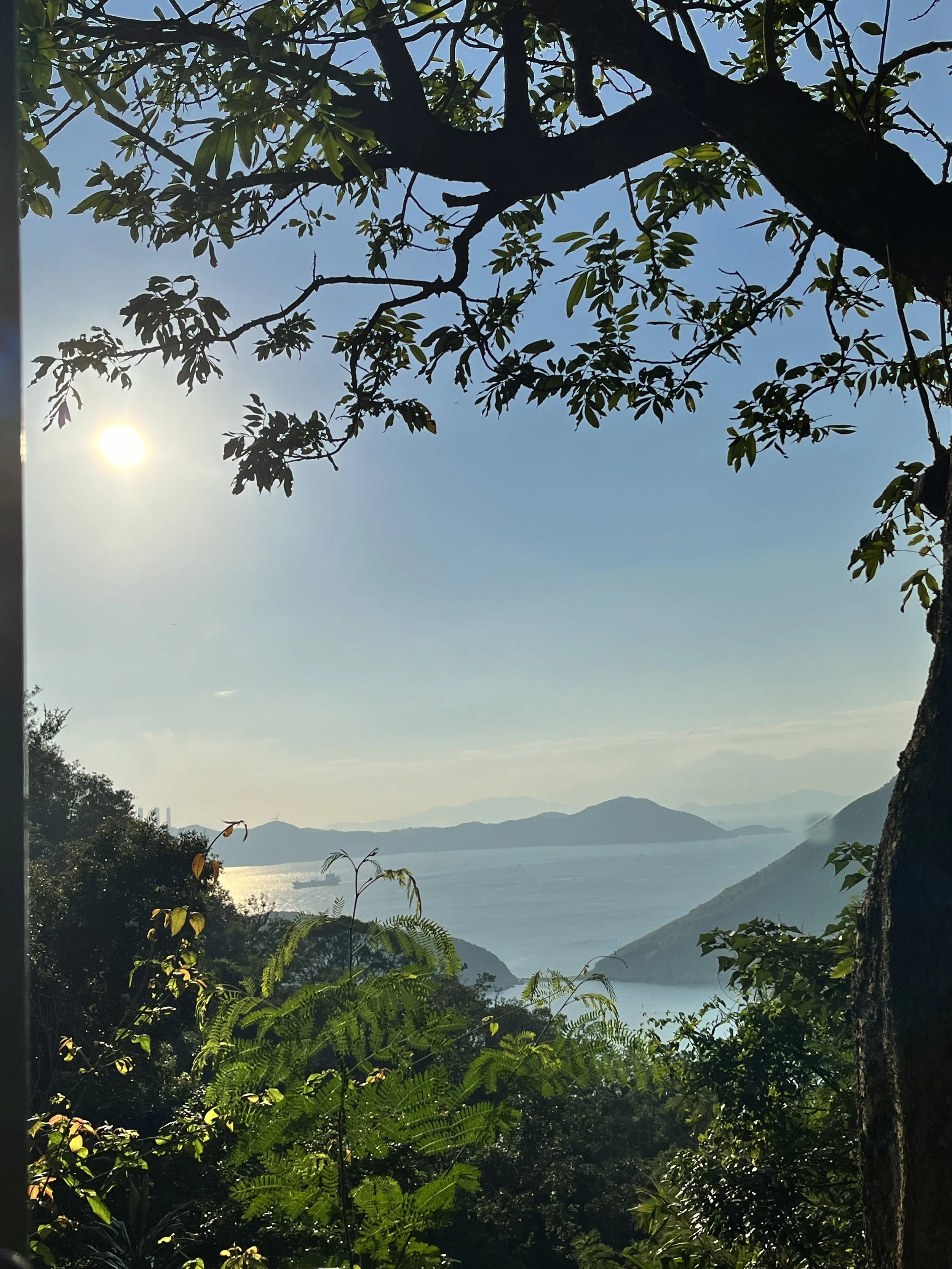
The Hong Kong isles fading into the distance.
A Perspective on Feng Shui
If I think about how feng shui has changed my life, it comes down to the difference between surviving and thriving. You know it when you see it, but when looking at things in their multitude, it seems hard to perceive a distinction. I’m referring mainly to people, but a houseplant is a relevant analogy. A plant that is surviving still looks like a plant and, given that it is not actively dying, contributes pleasantly to the space. However, a plant that is thriving is bright, lush, clearly full of vitality; one might even overlook it, especially one with little experience of tending to plants, if it were among many other plants or if it were stood alone, without comparison. It becomes obvious when the two are placed side by side. I’m not campaigning for comparison, it comes all too naturally anyway, but what I am trying to make clear is this: You know the difference between when you are in survival mode, and when living barely takes a second thought. Barely any effort to be. Ultimately, I’m not sure how much control we actually have over anything, but at least with feng shui there is a leeway into the natural cycles of everything, a point of accessibility to joining in with the flow of the environment. If it is all perceived to be totally out of control, any one of our actions redundant, why would we exercise our will upon anything? There must be a reason to take care of our environment. A reason to take care of ourselves. And for me, that is because when I am in a position where I feel I am thriving, what that really means is that I am at ease to enjoy life as it is presented. Feng shui is the base from which we stand, a foundation to flourish. The flourishing itself is up to us, our genuine will, but at least the soil can be rich, watered, and connected.
In today’s society, it is obvious that much of the ancient wisdom that underpins feng shui and its related disciplines has indeed been preserved, not that we would know what has been lost, since it has been lost. Perhaps the retention of such wisdom has proved itself to be insufficient, because it does not thrive in the general public consciousness, but survives, mostly dismissed, on the fringes of common awareness, considered as something optional, eccentric, or irrelevant. I myself am not innocent of broaching the subject with caution, in anticipation of some pushback wherein I am branded in another’s mind as a lunatic, who observes only the inconceivable, with no rooting in common sense. Yet, to me, it is bordering on absurd, that the knowledge capable of improving the quality of human life in measurable, practical ways remains largely on the periphery of modern living. If such principles were considered in the planning of our homes, our cities, our infrastructure, society would be better for it. If people were invited within the current institutions to really think about the nature of reality from a young age, without any religious dogma, or pre-conceptual bias, about energy, flux and flow, about the relationship between the inner and outer world, there might be less frustration at the circumstances we find ourselves in, and more understanding of our own role in shaping them.
Ethos
Life is strange and beautiful. In the grand scheme of things, I know very little of our reality however, I can do my best to describe the phenomena that occurs within it. Describing a phenomenon does not explain why it occurs yet the act of description does help me to understand the sheer complexity of nature’s systems. In coming to terms with the unknowable extent of this complexity, it allows me to accept that I too am a complex system existing within many systems. To seek the why detracts from experiencing reality in its most essential form. Harmony and beauty exist at a moment’s notice.
I only owe one thing to myself: To approach each moment with openness and honesty. To the world, which I also accept as a reflection of my innermost being, I owe the same. Every moment is precious and deserves gratitude. It took eons to arrive here; though, I was never not here. Such is the paradox of time and space.
The home is a constant feedback loop. We affect the home, the home affects us, and vice-versa. Is our environment a reflection of us or do we reflect the environment? It does not serve us to blame the past for our current situation. It only serves to choose in the here and now to do differently. If we choose to do nothing, then be at peace with that decision too. Believe in the home as a space that wants the best for you. It is only working against you as much as you are working against yourself. To seek help is to seek compassion.
“Mold the clay into a vessel,
Its hollow gives the vessel its purpose.
Chisel doors and windows to build a house;
its hollow gives the house its purpose”
- Lao Tzu, Tao Te Ching
On Lineage:
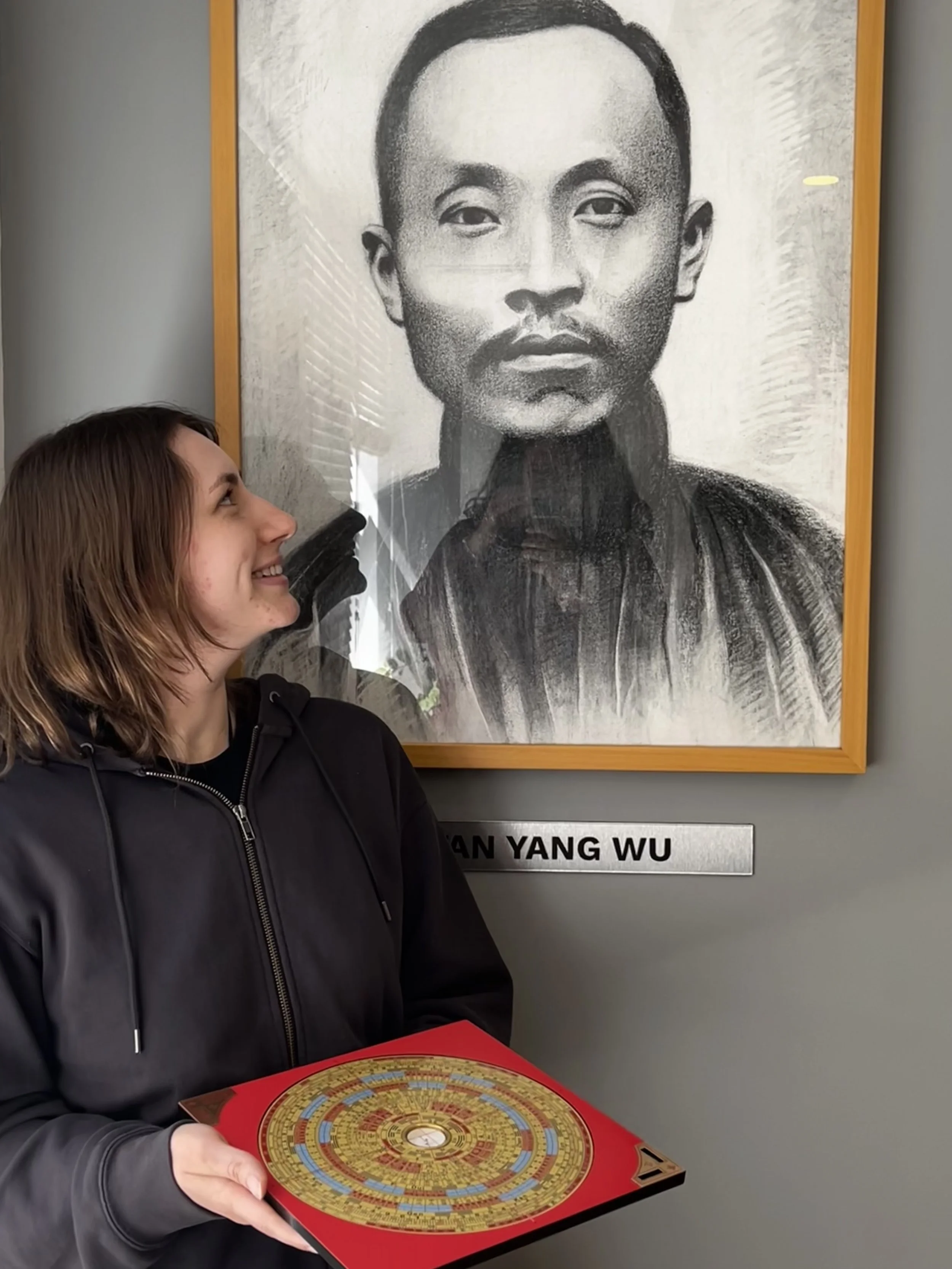
My knowledge on authentic Feng Shui has been passed down from master to master, with this particular oral lineage, specialised in Xuan Kong Fei Xing (Flying Stars), founded by Tan Yang Wu. Tan Yang Wu opened the first Feng Shui school and it was his two disciples, Sui Beng and Yen Pen, who passed on his lineage through the ages to masters Hong Choon, Francis Leyau and João Borges, among other contemporary masters who have attended Leyau’s academy in Malacca.